“What if you could process information 10x faster? Lift double your weight effortlessly? Or perform at peak under extreme stress?”
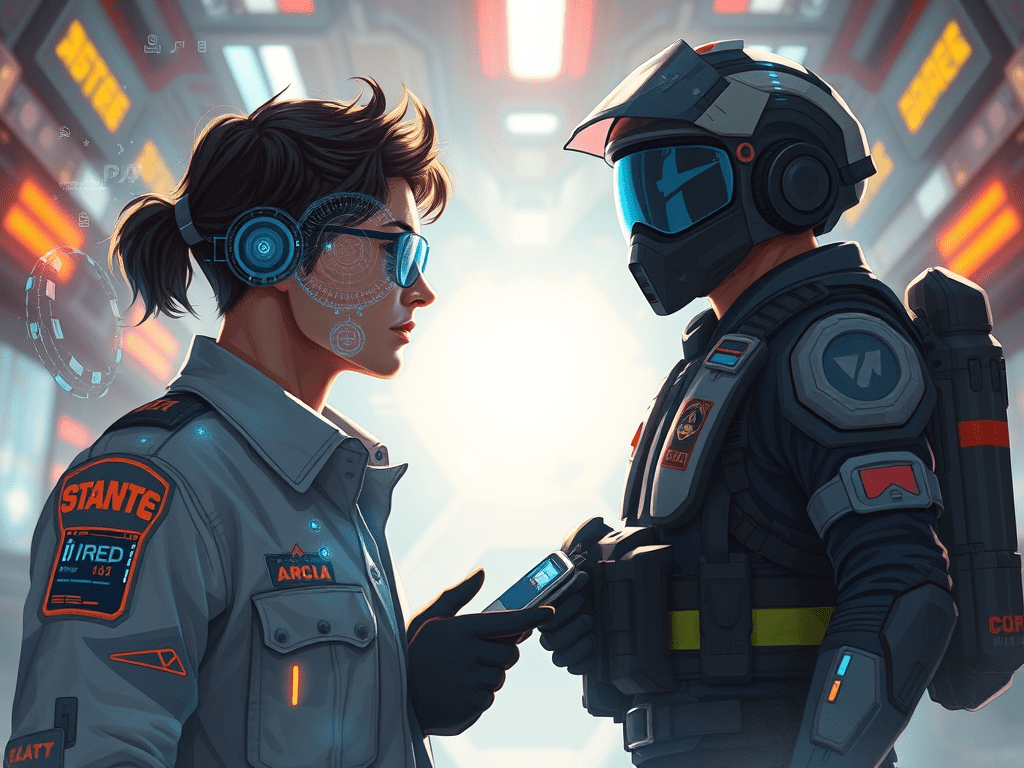
Human augmentation has transcended the realm of science fiction and is now a remarkable reality, actively enhancing our understanding of what it means to be human. The technologies that were once exclusive to elite athletes, astronauts, and high-tech laboratories are becoming increasingly accessible to thought workers and first responders – those dedicated individuals on the front lines of decision-making, problem-solving, and public safety. This shift opens up exciting opportunities for everyone to benefit from advancements that improve lives and foster collaboration.
Imagine a firefighter wearing an exoskeleton that allows them to carry three injured people out of a burning building instead of one. Or an intelligence analyst whose neural implants allow them to process terabytes of data in minutes. This is not just enhancement; it’s survival. It’s adaptation. And it’s the key to creating better, smarter, and stronger versions of ourselves moving forward.
The Human Limitation Barrier
As technology accelerates, the gap between human capacity and modern demands widens.
- Thought Workers (analysts, strategists, and decision-makers) face an overwhelming flood of data, tasks, and cognitive strain. Burnout and decision fatigue reduce productivity and performance.
- First Responders (police, paramedics, firefighters, and frontline security) operate in extreme, high-stress conditions. Physical limitations, slow decision-making, and fatigue directly impact lives.
The result? Human beings, as they are today, are struggling to keep pace with the increasing complexity and speed of their environments. The body and mind, while extraordinary, are finite.
But what if we could augment ourselves to overcome these limitations?
Augmenting Thought Workers and First Responders
The technologies enhancing human abilities are not futuristic fantasies – they’re here and available now. Let’s explore what’s current, what’s emerging, and how these tools can be applied to create a better version of ourselves.
1. Exoskeletons: Superhuman Strength and Endurance
What it is: Robotic suits worn on the body to enhance strength and reduce fatigue.
- For First Responders: Firefighters can carry heavier equipment and rescue more individuals in dangerous conditions. Paramedics can transport patients with less strain, minimizing injuries.
- For Thought Workers: While physical exoskeletons seem distant for desk workers, ergonomic suits already exist to support posture, reduce strain, and prevent long-term injury.
Example: Companies like Sarcos Robotics and Ekso Bionics are pioneering industrial exoskeletons that allow workers to lift heavy loads for extended periods without muscle fatigue.
2. Wearable Cognitive Devices: Enhancing Focus and Processing
What it is: Neurofeedback wearables and brain stimulation tools that improve focus, memory, and cognitive agility.
- For First Responders: Tools like Halo Sport use electrical stimulation to enhance motor learning, helping firefighters or police officers build quicker reflexes and better coordination under stress.
- For Thought Workers: Neurofeedback headsets like Muse or NeuroSky help professionals train their brains to achieve deep focus, reduce stress, and increase mental clarity in demanding environments.
Why it matters: In a high-pressure situation, seconds matter. The ability to process faster, stay calm, and act decisively can make the difference between success and failure.
3. Bio-Enhancements: Redefining Human Health and Resilience
What it is: Technologies like genetic enhancements, advanced prosthetics, and health optimization tools that expand human capabilities.
- For First Responders: Smart prosthetics enable injured veterans and police officers to perform duties at full capacity. Injectable peptides and biohacks enhance recovery and physical resilience.
- For Thought Workers: Personalized supplements, nootropics (“smart drugs”), and AI-driven health monitoring allow professionals to optimize energy, focus, and cognitive function.
Current Tools: Wearables like WHOOP and Oura Ring track sleep, strain, and recovery, helping individuals optimize their bodies for peak performance.
4. Neural Interfaces: The Future of Human-AI Collaboration
What it is: Brain-computer interfaces (BCIs) that allow direct communication between the mind and machines.
- For Thought Workers: Imagine an intelligence analyst who can seamlessly analyze massive datasets without screens or keyboards. BCIs like Neuralink are developing tools to boost cognitive performance.
- For First Responders: Real-time brain-AI communication could help teams coordinate actions more efficiently in life-threatening scenarios.
Emerging Future: While BCIs are still in early development, the rapid progress of companies like Neuralink suggests that direct human-machine interaction is closer than we think.
Becoming the Better Version of Ourselves
The power of human augmentation lies not in replacing humanity but in enhancing what makes us uniquely human.
For thought workers, embracing augmentation means transforming cognitive performance, freeing up mental bandwidth for creativity and strategy. Imagine consistently operating at your peak, breaking through plateaus, and achieving more without burning out.
For first responders, augmentation is the difference between saving one life and saving many. It’s the ability to stay resilient, calm, and physically capable in situations where human limits would otherwise fail.
This isn’t just about becoming superhuman. It’s about creating the best version of ourselves – a version that can:
- Think faster and smarter
- Adapt to high-pressure environments
- Recover quickly and endure longer
In the future, your competitive edge will depend on how well you leverage these tools. Those who resist augmentation risk falling behind. Those who embrace it will lead the way.
From Augmented to Unstoppable
Human augmentation isn’t just a technology revolution; it’s a mindset shift. It’s about reimagining our limitations as opportunities for growth.
- To thought workers: You’re not at war with AI; you’re collaborating with it. Enhance your cognition, optimize your workflow, and turn information overload into strategic clarity.
- To first responders: The tools are here to make you faster, stronger, and safer. Your courage deserves the best technology to support it.
In the age of human augmentation, our potential is not defined by what we’re born with but by what we choose to become.
The question is no longer “What can you do?” but rather “What can you become with the tools available to you today?”
The future is calling. Augment yourself, and answer it.
 My Future Frontiers
Leave a comment